

What is Akademik and how does it manage enrollment, assessment, and student finance?

Akademik is a software platform that schools, universities, corporate training teams, and online education businesses use to run their operations. One system handles course administration, assessment and grading, and student billing — all in one place.
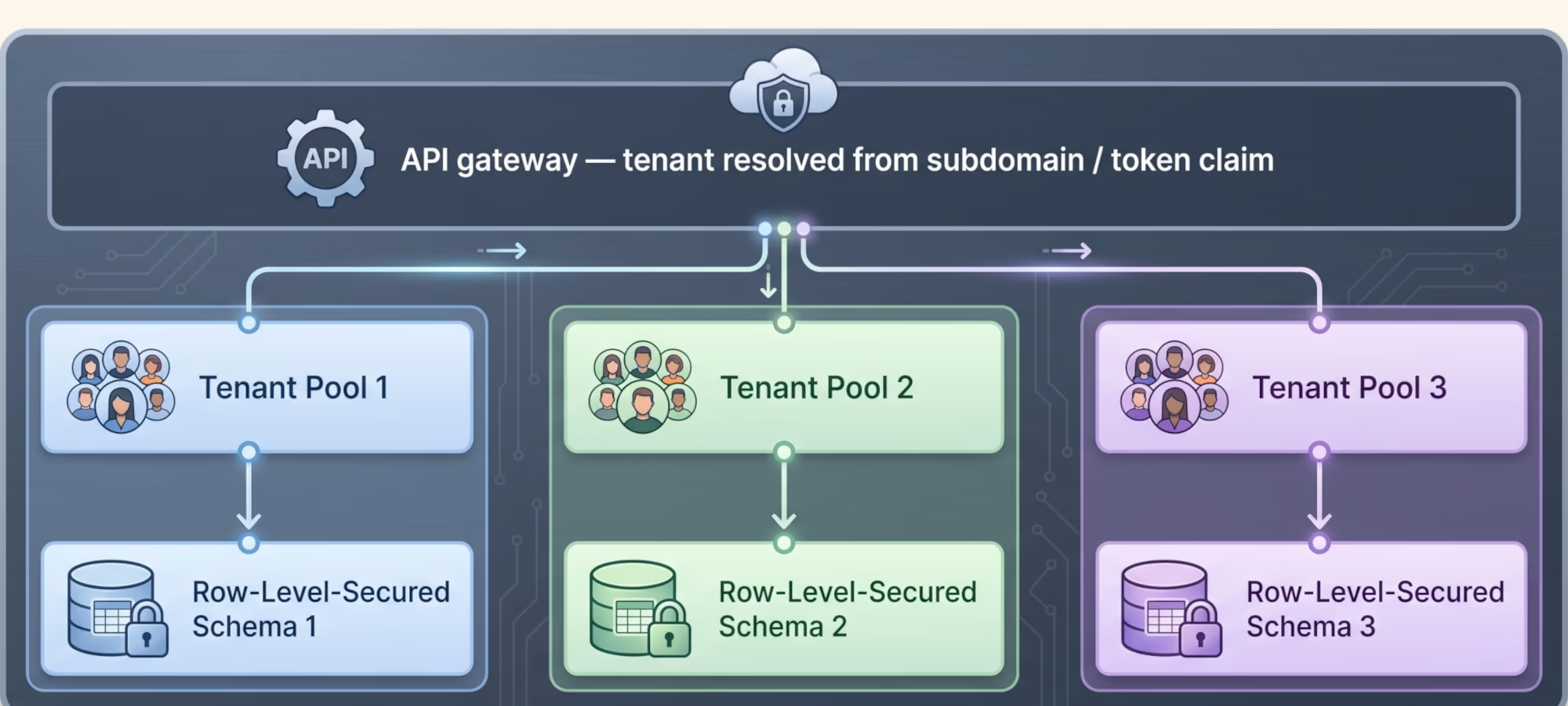
Each institution's data is kept completely separate from every other institution's, even though everyone runs on the same shared platform. That means a university and a corporate training team can both use Akademik without ever seeing each other's records, and without either one needing their own dedicated servers.
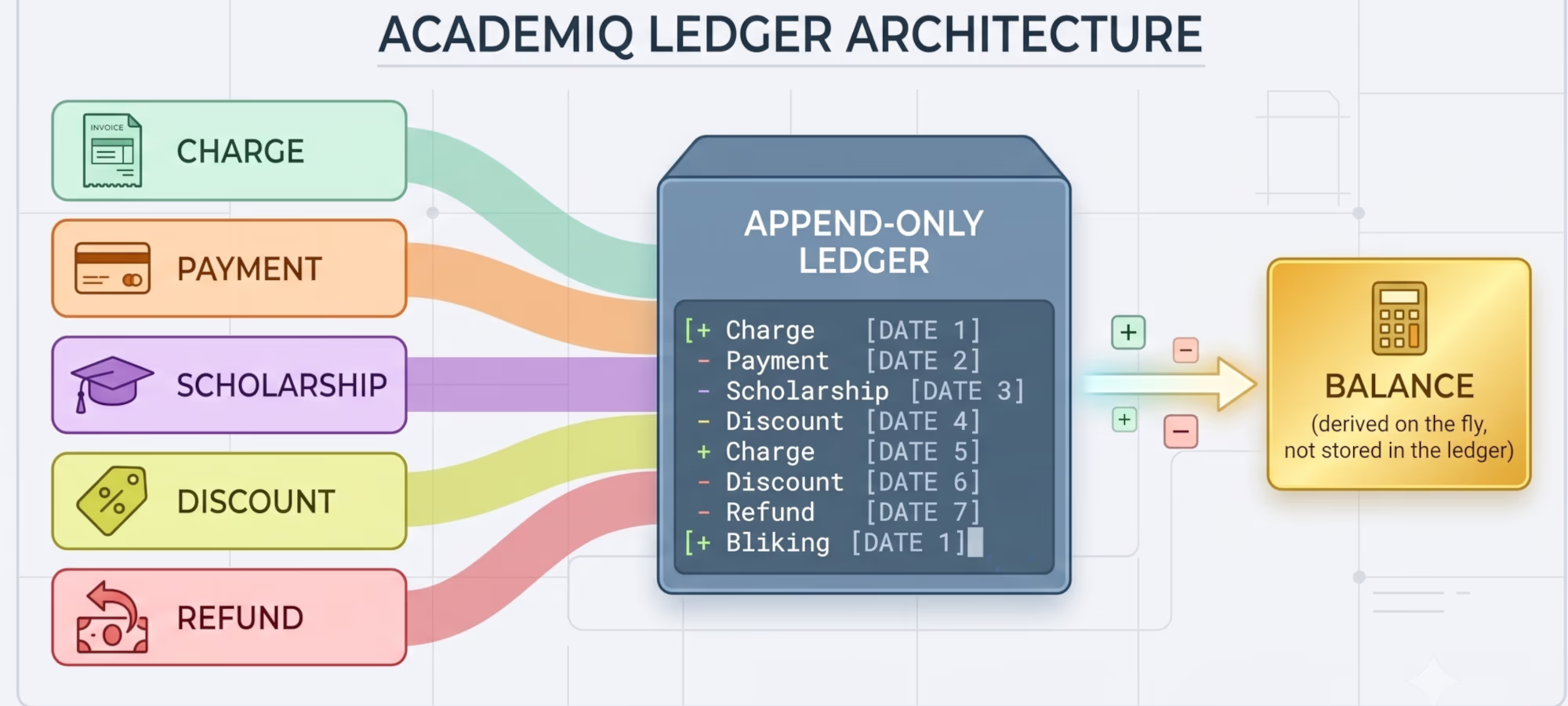
No single "balance" number — every change is its own recorded entry (see below)
Each institution's data is fully separated from every other institution's
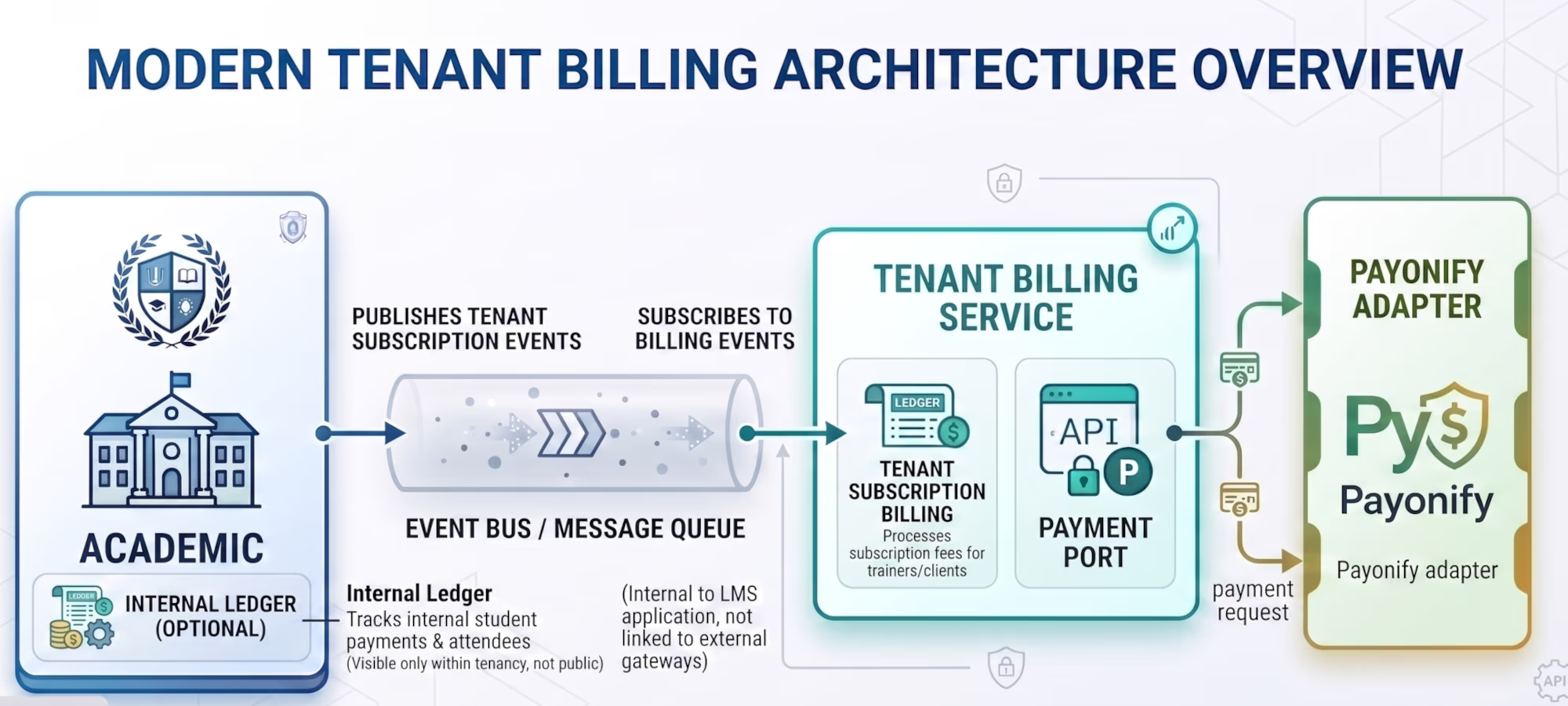
Not locked into one payment company — providers can be swapped without touching student records
What core modules and capabilities does Akademik provide for educational institutions?
Akademik covers four areas: running courses and grading, tracking what students owe and pay, billing the institutions themselves for their subscription, and keeping students engaged. Each part is built to be dependable and auditable.
Assessment Engine
Build timed assessments from a shared question bank, target them at a whole class or individual students, and control exactly when they open and close.
- Assessment Authoring & Scheduling
- Question Bank Management
- Gradebook
Student Financial Management
Every charge, payment, discount, and refund is its own recorded entry, so nothing gets lost and nothing needs reconciling.
- Student Ledger (full transaction history, not just a balance)
- Transaction Transparency
- Automated Invoicing
Platform Subscription & Billing
Institutions are billed for using Akademik itself, kept separate from student billing, and can be moved between payment providers without disruption.
- Institution-Level Billing
- Works With Any Payment Provider
- Subscription Tiers (Free, Hobby, Professional, Institution, Enterprise)
Success & Engagement
Badges, leaderboards, certificates, and built-in messaging to keep students and staff connected.
- Badges & Leaderboards
- Certificates
- Announcements & Discussion Boards
Multi-Tenancy & Reliability
Each institution's data is walled off at the database level, with an audit trail covering sensitive actions.
- Data Isolation Between Institutions
- Audit Trail & Background Processing
Why does Akademik use a ledger architecture instead of a traditional balance column for student accounts?
Most systems just update one "balance" number when money moves, which makes it hard to later prove how that number was reached. Akademik instead writes a new, permanent entry for every charge, payment, scholarship, discount, and refund. A student's balance is calculated by adding up their full history, not stored as a single editable figure — so every number can be traced back to what caused it.
How does Akademik handle tenant subscription billing without vendor lock-in?
The Billing module tracks each institution's subscription plan (Free, Hobby, Professional, Institution, Enterprise) and payment status separately from student academic and financial records. It connects to payment companies like Stripe or Paystack through a swappable adapter, so changing payment providers never touches student data or course records.
What types of institutions and organizations are ideal for Akademik deployments?
- Schools and universities modernizing enrollment, fee tracking, and grading
- Corporate training teams running structured upskilling programs and issuing certificates
- Software companies that need a ready-made, multi-institution backend with real financial and academic building blocks already in place
What are Akademik's pricing tiers and subscription options?
Akademik's pricing scales with the size of the institution using it. Each tier sets a limit on active students and which modules are available.
| Tier | Price | Student Capacity | What's Included / Excluded |
|---|---|---|---|
| Free | $0/mo | Up to 30 active students | No Finance module and no billing-provider integrations. Meant for trying the platform out, not for real student accounts. |
| Hobby | $29.99/mo + $1.20/student/mo | Up to 100 active students | Adds the Finance module and real billing-provider integration, unlike Free. No institution-wide analytics or dedicated infrastructure. Fits a single classroom, tutor group, or small pilot running with real students. |
| Professional | $75/mo + $1/student/mo | Up to 300 active students | No institution-wide analytics and no dedicated infrastructure. Fits a single department or small training provider. |
| Institutionrecommended | $985/mo + $0.88/student/mo | Up to 3,000 active students | No enterprise SLA and no custom payment-provider development. Where most multi-campus institutions land. |
| Enterprise | Custom pricing | Unlimited students | Full feature set, including dedicated infrastructure, custom payment-provider integrations, and a 24/7 support agreement. |
Contact us to confirm pricing or to discuss a larger, multi-campus deployment.
How Akademik approaches quality and reliability.
The platform is covered by an automated test suite spanning unit, integration, and end-to-end tests across its core modules — authentication, grading, billing, certificates, notifications, and more. Formal uptime, latency, and coverage figures will be published here once the platform has a public production track record to measure.