

01 — Decision Records
Reasoning, as it was actually written down.
Every architectural decision on a Whyire engagement produces a Decision Record in the client's own repository. These three are redacted for publication — client identity, dates in some fields, and specific figures withheld at the engagement's request.
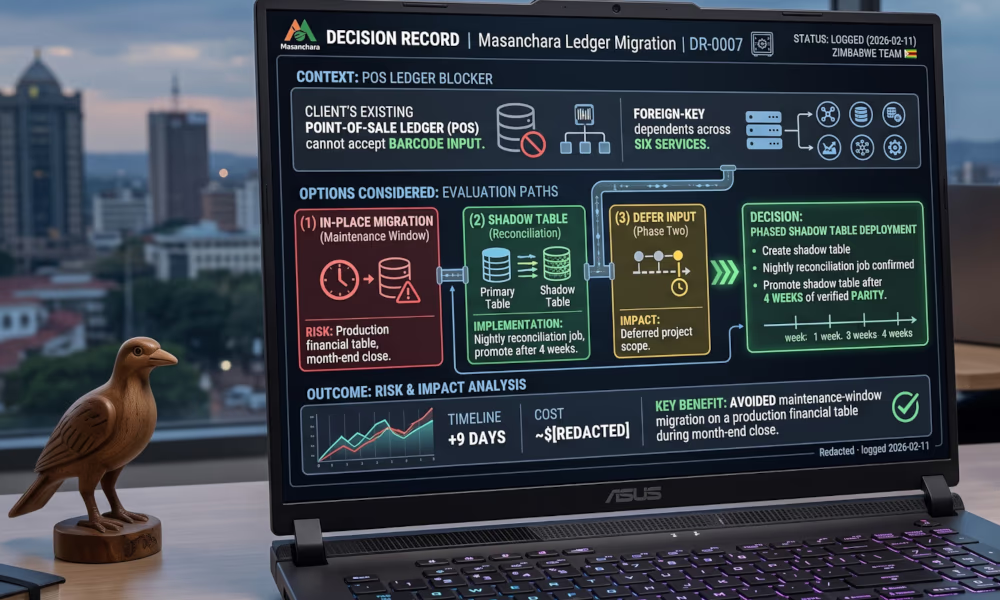
EVIDENCE — DR-0007 · Masanchara — ledger migration
{
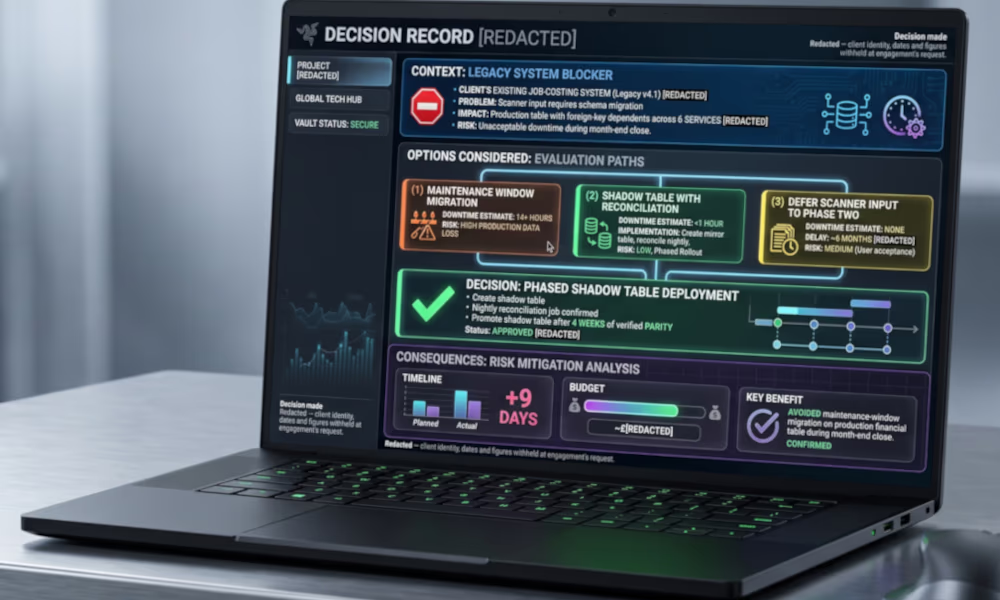
  "title": "Shadow-table migration over in-place schema change",
  "context": "Client’s existing point-of-sale ledger could not accept barcode-scanner input without a schema migration on a table with foreign-key dependents across six services.",
  "options_considered": [
    "In-place migration during a maintenance window",
    "Shadow table with a nightly reconciliation job",
    "Defer scanner input to phase two"
  ],
  "decision": "Shadow table, reconciled nightly, promoted to primary after four weeks of measured parity.",
  "consequences": [
    "Added roughly nine days and a redacted cost to the timeline.",
    "Avoided a maintenance-window migration on a production financial table during month-end close."
  ],
  "metadata": {
    "author": "Redacted",
    "date_logged": "2026-02-11"
  }
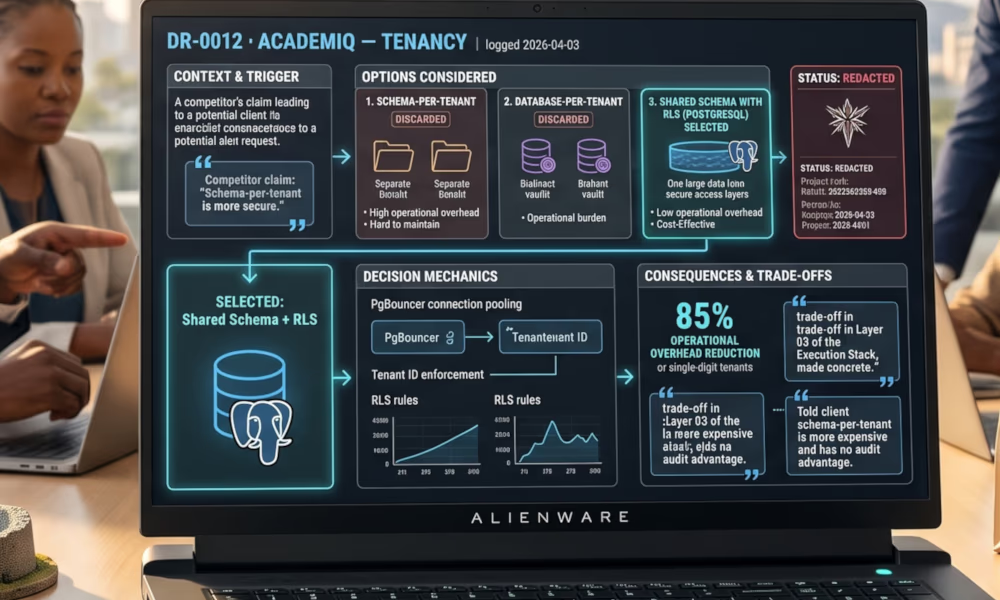
}EVIDENCE — DR-0012 · Academeek — tenancy
{
  "title": "Row-level security over schema-per-tenant",
  "context": "A prospective client asked for schema-per-tenant isolation, citing a competitor’s marketing claim that it is \"more secure.\"",
  "options_considered": [
    "Schema-per-tenant",
    "Database-per-tenant",
    "Shared schema with PostgreSQL row-level security"
  ],
  "decision": "Shared schema with row-level security, tenant id enforced at the connection-pool layer.",
  "consequences": "Materially lower operational overhead at the client’s actual tenant count (single digits). We told the client schema-per-tenant would cost more to run and would not measurably change their audit posture — the trade-off in Layer 03 of the Execution Stack, made concrete.",
  "metadata": {
    "status": "Redacted",
    "logged_date": "2026-04-03"
  }
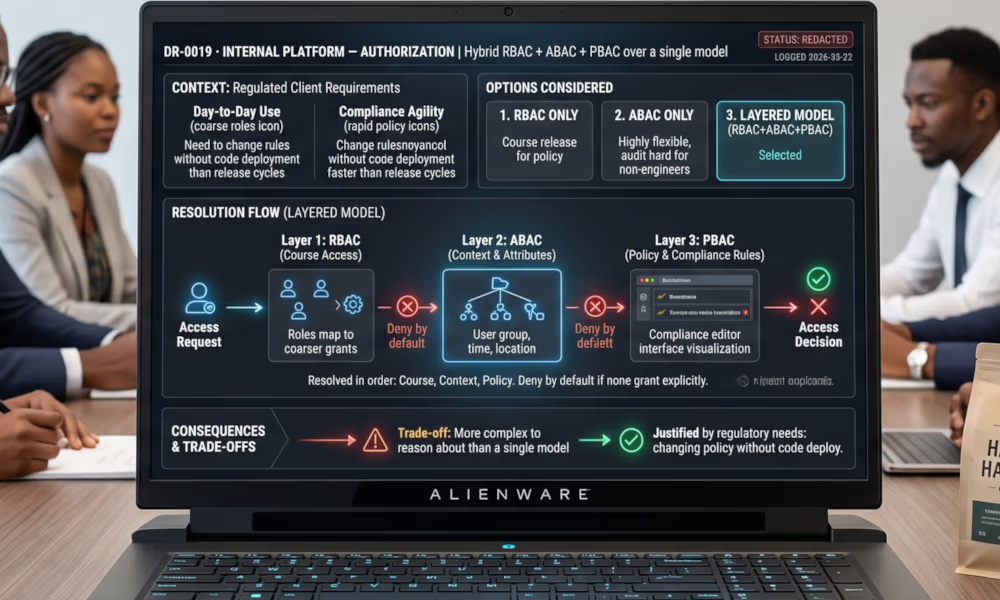
}EVIDENCE — DR-0019 · Internal platform — authorization
{
  "title": "Hybrid RBAC + ABAC + PBAC over a single model",
  "context": "A regulated client needed role-based grants for day-to-day use but policy-level rules that could change without a deployment, for compliance reasons that shift faster than release cycles.",
  "options_considered": [
    "RBAC only, with a slower release cycle for policy changes",
    "ABAC only, more flexible but harder for non-engineers to audit",
    "A layered model: RBAC for coarse access, ABAC for context, PBAC for policy that compliance can edit directly"
  ],
  "decision": "Layered model, resolved in that order, denying by default if none grant explicitly.",
  "consequences": "More complex to reason about than a single model — this is the trade-off we would flag to a client considering it for a simpler use case. Justified here because compliance needed to change policy without a code deploy.",
  "metadata": {
    "author": "Redacted",
    "date_logged": "2026-05-22"
  }
}EVIDENCE — DR-0024 · Whyire — marketing site & brand positioning
{
  "title": "Merit-first positioning over premature testimonials",
  "context": "During initial brand rollout and site development, client testimonials and partner quotes were considered. However, premature marketing attributions risk compromising Whyire’s core tenet of verified evidence over assertion.",
  "options_considered": [
    "Publish placeholder testimonials or unverified partner quotes",
    "Omit social proof and operate purely on merit and measurable telemetry for the first year",
    "Delay site launch until all client case studies are signed off"
  ],
  "decision": "Omit social proof entirely for the first year, relying solely on factual measurements (deployment times, latency p95, test coverage, uptime) and technical depth; build up client testimonials and case studies organically as client engagements complete and formally sign off.",
  "consequences": [
    "Positions Whyire with absolute intellectual honesty and zero manufactured authority.",
    "Aligns perfectly with the \"Measured, not asserted\" principle in the Evidence section.",
    "Future testimonials will carry verified weight because they are earned through delivered production systems rather than marketing promises."
  ],
  "metadata": {
    "author": "Core Engineering",
    "date_logged": "2026-08-17"
  }
}